
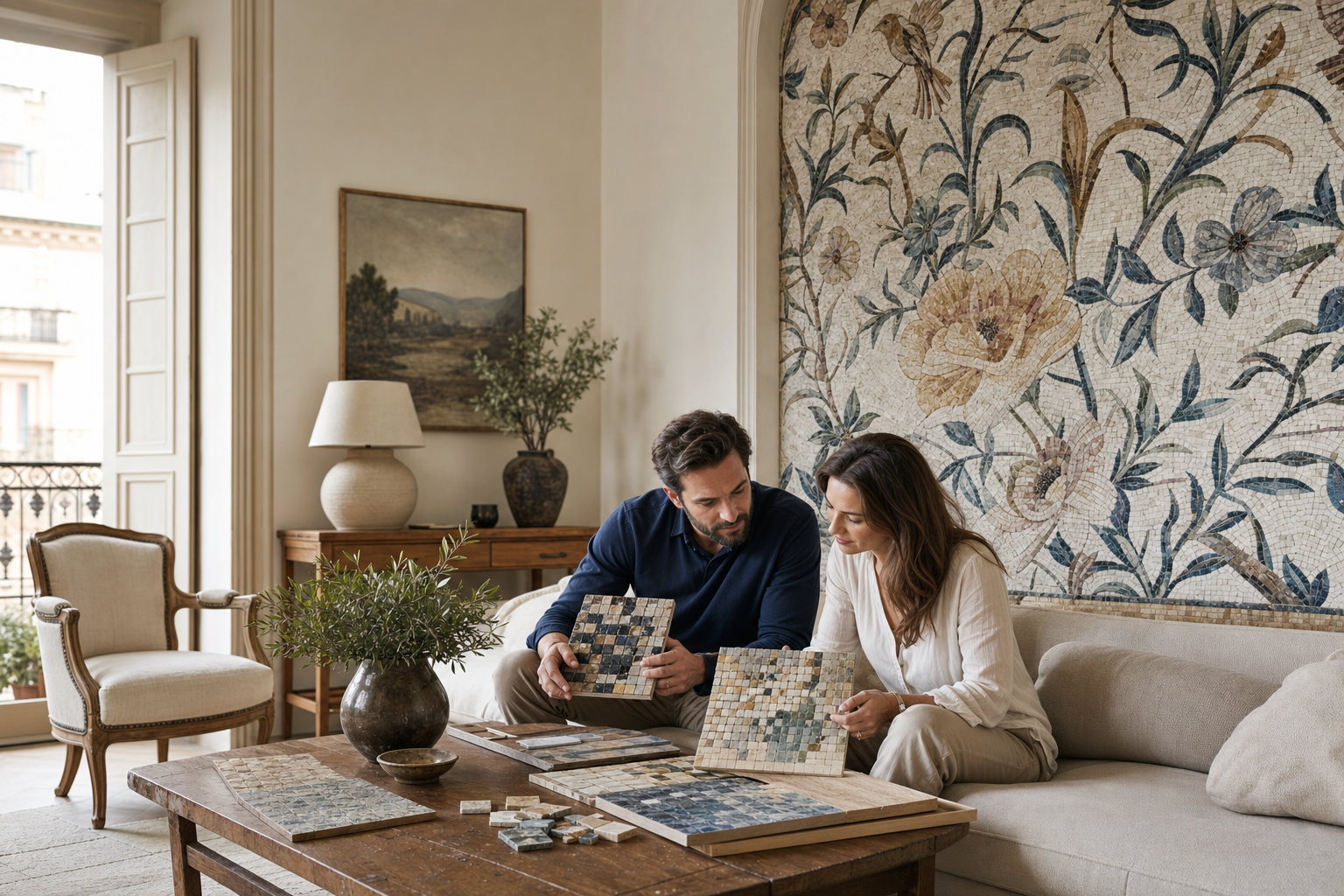
A hand-cut mosaic mural is both artwork and architectural material. The right choice should look compelling from across the room, reward a closer look, and suit the wall, light and daily life around it. This guide explains the decisions that matter before you order.
1. Start with the room, not the artwork
Begin by photographing the complete wall straight on. Include nearby furniture, doors, windows, switches and lighting. Then record the wall’s width and height, the distance from which the mural will usually be viewed, and whether the room receives warm or cool natural light.
These facts determine more than size. A mural seen from a hallway needs a clear silhouette and strong composition; one beside a dining table can support finer detail because people will spend time close to it.
A practical first step
Mark the proposed mural dimensions on the wall with low-tack painter’s tape. Live with the outline for a day and view it from every normal entrance and seat.
2. Choose a subject that gives the room a role
Subject matter should reinforce how you want the space to feel. Florals can soften a formal room; landscapes add depth to a narrow wall; animals create a memorable focal point; figures bring narrative and presence. The strongest choice is not simply the image you like in isolation—it is the image that improves the room around it.
- Living room: choose a composition with a clear focal point that remains legible from the main seating area.
- Dining room: consider calm movement, botanical themes or landscapes that support the atmosphere without dominating conversation.
- Entry: prioritize an immediate silhouette and strong contrast; the first view is usually brief.
- Bedroom: use a quieter palette and avoid placing the visual focus where it competes with the bed or window.
3. Understand material, surface and color
| Material choice | Visual character | What to check |
|---|---|---|
| Natural stone | Soft, mineral and slightly varied; usually reads as timeless and architectural. | Natural variation, surface finish, thickness and whether the intended location needs sealing. |
| Glass | More luminous and color-saturated; reacts strongly to daylight and directional lighting. | Reflections, color shift under different light and suitability for the intended setting. |
| Mixed materials | Combines depth, sparkle and tonal variation for a more layered image. | How transitions are handled and whether samples accurately show the final balance. |
Do not approve color from a phone screen alone. Displays vary, and stone or glass changes with ambient light. Ask for close-up photographs in neutral light and, for a custom or color-sensitive project, request a physical sample before final approval.
4. Match tessera size to detail and viewing distance
Tesserae are the individual pieces that form the image. Smaller and more carefully shaped pieces can describe eyes, petals, hair and subtle transitions; larger pieces create a broader, more graphic rhythm. Neither is automatically better. The correct scale depends on the artwork’s detail, the mural’s dimensions and how close viewers will stand.
Judge a mosaic twice: once from across the room, and once close enough to see the handwork.
Ask to see one full image and at least two full-resolution detail photographs. This reveals cutting quality, grout spacing, color transitions and whether important features remain clear at the proposed size.
5. Select the size by proportion, not by guesswork
For a mural above a console, sofa or sideboard, a width around two-thirds to three-quarters of the furniture can be a useful visual starting point—not a fixed rule. Freestanding feature walls may support a larger installation. Preserve deliberate space around the mural so it does not look squeezed between corners, trim or lighting.
If you are resizing an existing design, ask whether the artwork will be cropped, extended or redrawn. Simply stretching an image can distort figures and reduce detail. A responsible maker should adapt the composition to the requested proportions.
6. Compare ready designs and custom commissions
A ready design is efficient when its composition, palette and proportions already suit your wall. A custom commission is appropriate when you need a specific size, color relationship, portrait, landscape, brand-free family subject or architectural fit. Custom work should include a clear approval stage before production begins.
Buyer’s checklist
- Exact finished dimensions and approximate thickness
- Material list and surface finish
- Full image plus close-up detail photographs
- How the mural will be divided, numbered and packed
- Recommended substrate, adhesive and grout approach
- Production lead time and shipping method
- What is included in the price and what requires a separate installer
- For custom work, the revision and design-approval process
7. Make the final decision with evidence
Before paying, compare the mural against your taped wall outline, review material samples in the actual room, confirm the installation plan with a qualified local installer, and obtain written specifications from the maker. A careful decision at this stage prevents expensive changes after production.